§ 01
Overview
Module 6.1: MATA Program Overview
What Is MATA?
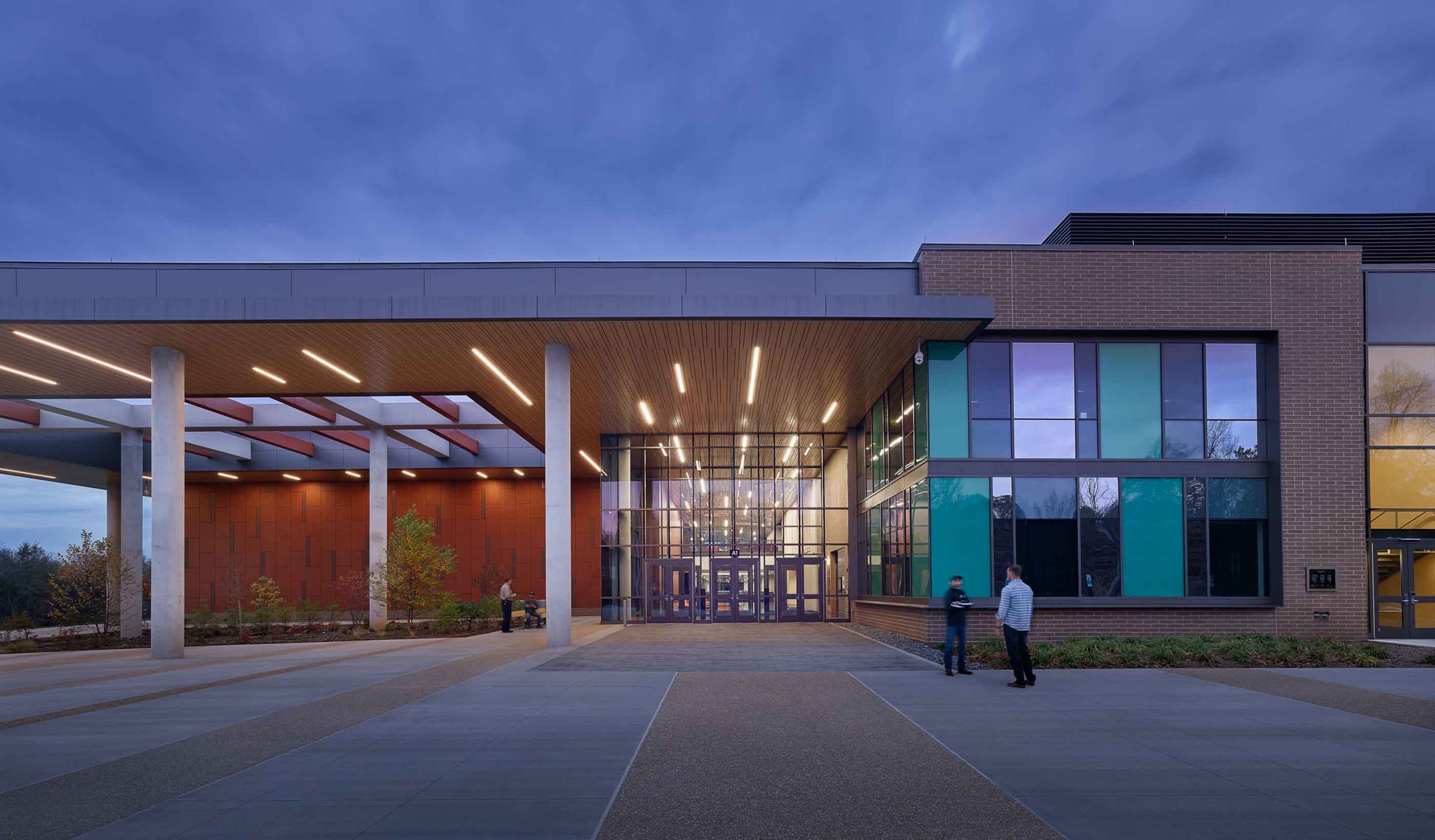
The Monroe Advanced Technical Academy --- MATA --- is one of the three programs housed at the Academies of Loudoun campus in Leesburg. But it's fundamentally different from its neighbors, AOS and AET.
Where AOS is about scientific research and AET is about engineering and technology, MATA is about career and technical education (CTE). It's designed for students who want to gain real-world career skills, earn industry-recognized credentials, and explore professional pathways --- all while still in high school.
MATA holds a Governor's STEM Academy designation from the Virginia Department of Education. That's not a participation trophy. It's a formal recognition that the program delivers rigorous, industry-aligned STEM education that meets state standards for workforce preparation. Only a handful of programs in Virginia carry this designation.
Here's the key philosophical difference: AOS and AET are primarily designed to prepare students for competitive university admissions and advanced academic careers. MATA is designed to prepare students for both college and direct workforce entry. Some MATA graduates go straight to four-year universities. Others go into apprenticeships or technical training. Others enter the workforce with industry certifications in hand. All of those are legitimate outcomes, and MATA's curriculum is built to support all of them.
The CTE Pathway Options
This is where MATA really stands apart. The program offers 26 career pathway options organized across multiple career clusters. That's a significant number --- twenty-six distinct pathways, each with its own curriculum, its own industry connections, and its own certifications.
Some pathways are one-year programs. Others span two years. Here's a look at what's available, organized by career cluster.
Health Sciences
This is MATA's largest and most popular cluster, with pathways including:
-
Biomedical Technology (2-year)
-
Health Informatics
-
Introduction to Health and Medical Sciences
-
Medical Laboratory Technology (2-year)
-
Certified Nurse Aide
-
Pharmacy Technology (2-year)
-
Radiology Technology (2-year)
Health sciences has historically been the most in-demand cluster at MATA. Demand has been so high that LCPS created the separate HAMSci program at Briar Woods and Tuscarora High Schools partly to relieve MATA's enrollment pressure in this area.
Information Technology
-
Cybersecurity
-
CISCO Networking
-
Computer and Digital Animation
-
Computer Integrated Engineering and Design
If your student is interested in IT but not sure they want the full engineering focus of AET, MATA's IT pathways offer a more career-oriented approach. Cybersecurity in particular is a high-growth field with strong employment prospects even at the entry level.
Transportation, Distribution, and Logistics
-
Auto Servicing Technology (2-year)
-
Auto Collision Repair Technology
MATA's automotive programs use an industry-standard curriculum certified by ASE (Automotive Service Excellence). Students can work toward ASE certifications in areas like engine performance, manual drive train, and automatic transmission.
Architecture and Construction
-
Building Construction (Carpentry/Residential Construction)
-
Heating, Ventilation, and Air Conditioning (HVAC)
-
Masonry
-
Welding (2-year)
The skilled trades pathways are among MATA's hidden gems. Welding, HVAC, and construction offer some of the strongest job prospects of any pathway in the program. These are high-demand fields with starting salaries that often exceed what many four-year college graduates earn in their first jobs.
Agriculture, Food, and Natural Resources
- Environmental Plant Science (Horticulture)
Students study plant science, forestry, natural resource management, sustainable landscaping, and soil science. Industry certifications are available through the Virginia Nursery and Landscape Association and other organizations.
Hospitality and Culinary
- Culinary Arts
The culinary program prepares students for employment in the culinary industry or for post-secondary training in culinary arts, baking and pastry, or restaurant management.
Arts, Audio/Visual Technology, and Communications
-
Graphic Communications (2-year)
-
Television Production and Moviemaking
These pathways blend creative skills with technical production knowledge --- design software, video production, print technology, and digital media.
Law, Public Safety, and Security
- Administration of Justice
This pathway covers law enforcement, criminal justice, and public safety career preparation.
Health Science (Emergency Services)
- Emergency Medical Technician (EMT)
Successful completion of the EMT pathway can make students eligible to take the Virginia State Psychomotor Exam and the National Registry EMT cognitive exam. That's a real, working credential --- not a classroom exercise.
Agriculture (Animal Science)
- Veterinary Science
For students interested in veterinary medicine or animal care, this pathway provides foundational training in animal health and veterinary practices.
Personal Care Services
- Cosmetology (2-year)
The cosmetology program is a full two-year pathway leading toward state licensure eligibility.
Science and Engineering
- Biotechnology
This pathway bridges the gap between pure science and career application, focusing on lab techniques and biotechnology industry practices.
How to Choose a Pathway
Critical note for 8th-grade applicants: If your student is currently in 8th grade and applying to MATA, they are ONLY eligible for one pathway: Introduction to Health and Medical Sciences. All other 25 pathways are restricted to 10th and 11th graders. This is a frequently misunderstood limitation --- make sure you're aware of it before applying.
Twenty-six options is a lot for eligible students. Here's a framework for narrowing it down.
Start with genuine interest, not prestige. There's no "best" MATA pathway. The best one is the one that aligns with what your student actually wants to do. A student who's passionate about welding and goes all-in on that pathway will get far more out of MATA than a student who half-heartedly picks biomedical technology because it sounds more impressive on a college application.
Think about what your student likes to do, not just what they like to study. MATA is hands-on. It's not about sitting in a classroom reading textbooks --- it's about doing things. Does your student like working with their hands? Building things? Cooking? Taking care of animals? Working with computers? Helping people in medical settings? The answers to those questions point toward specific clusters.
Consider the time commitment. Some pathways are one year, some are two. A two-year pathway means your student commits to that track for the remainder of high school. Make sure they're genuinely interested enough to sustain that engagement over two full years.
Look at the certification outcomes. One of MATA's biggest value propositions is the ability to earn industry certifications while still in high school. Some pathways lead to certifications that have immediate job market value (EMT, ASE automotive certifications, CompTIA cybersecurity certifications, certified nurse aide certification, welding certifications from the American Welding Society). If your student wants to enter the workforce with a credential, compare what different pathways offer.
Talk to current students if possible. Nothing replaces hearing from someone who's actually in the program. LCPS hosts information sessions and open houses --- take advantage of them. Ask current MATA students what their day-to-day experience is really like.
Governor's STEM Academy: What the Designation Means
MATA's Governor's STEM Academy designation isn't just a label. It means the program has been formally evaluated by the Virginia Department of Education and meets specific criteria for:
-
Industry-aligned curriculum --- course content is developed in partnership with industry professionals and reflects actual workforce needs
-
Credential attainment --- students have structured pathways to earn industry-recognized certifications, licenses, and credentials
-
Work-based learning --- the program incorporates real-world work experiences, not just classroom instruction
-
STEM integration --- career-technical content is connected to science, technology, engineering, and mathematics in meaningful ways
-
Post-secondary connections --- pathways are designed to articulate with college programs, apprenticeships, and workforce entry
The designation also means MATA has access to additional state resources and supports that non-designated CTE programs don't receive. It's a signal to colleges, employers, and apprenticeship programs that MATA graduates have completed a serious, vetted program --- not just a few elective courses.
MATA vs. AOS and AET: Different Programs for Different Students
This is worth stating directly, because families sometimes think of MATA as "the less selective Academies program" or "the backup option." That's the wrong way to think about it.
MATA, AOS, and AET serve fundamentally different types of students with different goals. Here's the clearest way to think about it:
AOS is for the researcher. The student who wants to spend four years going deep into advanced math and science, conducting independent research, and preparing for a STEM-focused university career. AOS is academic and theoretical.
AET is for the builder. The student who wants to engineer solutions, write code, design systems, or launch ventures. AET is academic but applied --- the focus is on making things work.
MATA is for the practitioner. The student who wants to learn a trade or profession, earn credentials, and be ready to work --- whether that's immediately after graduation or after further training. MATA is practical and career-oriented.
None of these is better or worse than the others. They're different tools for different goals. A student who wants to be an automotive technician has no business applying to AOS. A student who wants to do biomedical research has no business applying to MATA. And a student who wants to build robots should probably look at AET.
The question isn't "which program is the best?" It's "which program is the best fit for this particular student?"
Is MATA Right for Your Student?
MATA is probably a strong fit if your student:
-
Has a clear career interest that maps to one of the 26 pathways
-
Learns best by doing --- hands-on, project-based, practical work
-
Wants to earn industry certifications or credentials before graduating high school
-
Is interested in careers in health sciences, skilled trades, IT, culinary arts, public safety, or other CTE fields
-
Wants to keep their post-secondary options open (college, apprenticeship, or workforce)
-
Doesn't want to give up their home high school experience entirely --- the alternating day schedule means they stay connected
MATA might not be the best fit if your student:
-
Wants a research-intensive STEM experience (that's AOS)
-
Is primarily interested in competitive university admissions for engineering or computer science (that's AET)
-
Doesn't have a specific career interest and is applying just to be at the Academies campus
-
Isn't comfortable with hands-on, applied learning --- MATA is not a lecture-and-textbook program
§ 01
Key Takeaways
-
MATA is a career and technical education program with a Governor's STEM Academy designation. It's designed to prepare students for both college and direct workforce entry.
-
The program offers 26 distinct CTE pathways across career clusters including health sciences, IT, skilled trades, culinary arts, automotive, public safety, and more.
-
MATA is not a "lesser" version of AOS or AET. It serves a different type of student with different goals. The right program depends entirely on the individual student.
-
Industry certifications are a major value proposition. Students can earn real, recognized credentials --- EMT, ASE automotive, CompTIA cybersecurity, certified nurse aide, welding --- while still in high school.
-
Like all ACL programs, MATA uses the alternating day schedule. Students attend the Academies campus on A days and their home high school on B days.